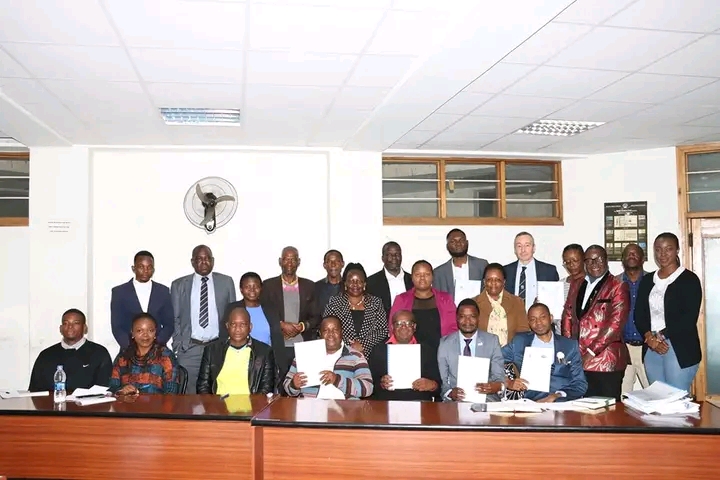
To strengthen knowledge, attitudes, and practices on menstrual hygiene management and improve community, school, and cultural support systems for adolescent girls, YWCA trained 35 participants, including mentor girls, male champions, Parent-Teacher Association members, Mother group members, initiation counsellors, and the village head. The intervention aimed to address critical gaps in knowledge, harmful cultural practices, and inadequate hygiene management that contribute to school absenteeism, early pregnancies, and gender-based vulnerabilities among adolescent girls.
There was a widespread lack of understanding of menstruation and reproductive health among both adolescents and adults. Misconceptions were deeply entrenched. For instance, it was noted that most of the girls, mother group members, and initiation counsellors did not know exactly what menstruation is; for example, one participant described menstruation as “a vein that has broken,” reflecting widespread misconceptions.
Through the training, it was confirmed that certain traditional practices, particularly initiation teachings, contribute to early sexual activity, early marriages, and limited openness in discussing reproductive health. It was also revealed that there was limited understanding of menstruation and the menstrual cycle, and a link between School absenteeism and dropout related to menstruation. Therefore, Menstrual hygiene management remains a significant barrier to education, health, and dignity for adolescent girls in rural Malawi.
These challenges are compounded by limited engagement between health systems, schools, and traditional structures. This training was therefore designed to provide integrated, community-driven solutions. The training successfully enhanced participants' knowledge and practical skills, strengthened community-level capacity, and initiated dialogue on transforming harmful socio-cultural norms. Participants demonstrated improved understanding of menstruation, sexual and reproductive health (SRH), and gender rights, positioning them as key agents for community-level change.
Published by: vitumbiko mkinga